
Blog
Collagen: The Secret Behind Healthy Skin, Strong Hair and an Active Body
Ask anyone in Pakistan who has crossed thirty what changed about their skin first, and you will usually hear the same answer: it stopped bouncing back. Skin that once looked plump after a late night starts holding on to tiredness a little longer. Fine lines settle in around the eyes. The face looks less firm than it did five years ago.
There are many reasons for this, but one of the most talked about is collagen. It is a protein your body makes on its own, and it works quietly in the background — holding skin together, cushioning joints, supporting bones, muscles and connective tissue.
That is why collagen is no longer only a beauty-counter word. Searches for collagen supplements in Pakistan, marine collagen price in Pakistan and halal collagen have grown sharply over the last two years, and not only among women. This guide explains what collagen actually is, what it can and cannot do, and how to choose a collagen supplement sensibly if you decide you want one.
What Exactly Is Collagen?
Collagen is the most abundant protein in the human body. Roughly a third of all the protein you are made of is collagen, and it behaves less like a nutrient and more like scaffolding — the framework that gives tissue its shape and strength.
In skin, collagen makes up around 70 to 80 per cent of the dry weight of the dermis, the layer sitting beneath the surface you can see. You will sometimes read that skin is “75% collagen”; the accurate version is that collagen accounts for most of the skin’s dry weight once water is removed. Either way, the point stands: collagen is the main structural material your skin is built from.
There are close to thirty known types of collagen, but three do most of the work. Type I is the dominant type in skin, bone and tendon. Type II is concentrated in cartilage. Type III appears alongside Type I in skin and blood vessels. Most collagen supplements sold for skin are built around Type I.
Why Collagen Changes as You Get Older
Your body produces collagen naturally, and for the first two or three decades it keeps up comfortably. From the mid-twenties onwards, natural collagen production begins to slow gradually, and the collagen already in the skin becomes more fragmented over time.
Ageing is only part of it. Sun exposure is widely considered the single largest external factor affecting collagen in the skin, which matters a great deal in a country where strong sunlight is a daily reality from Karachi to Multan. Smoking, high sugar intake, poor sleep, pollution and low protein intake are all associated with poorer skin condition over time.
This is why the question people really ask is not “what is collagen” but how to boost collagen — and the honest answer involves your whole routine, not one product.
Why Your Skin Loves Collagen
When people hear the word collagen they think about skin first, and there is a good reason for that.
It Supports Firmness and Structure
Collagen fibres are what give skin its density and resilience. When that framework is well supported, skin looks firmer and feels more comfortable. This is the core of why collagen for skin has become one of the most searched wellness topics in Pakistan.
It Plays a Role in Skin Elasticity
Skin naturally changes with time. Fine lines become more noticeable and firmness gradually decreases. Collagen is one part of that process, working alongside elastin and the skin’s own moisture barrier.
A growing body of research on oral collagen peptides suggests they may support skin hydration and elasticity when taken consistently over several weeks. The results in these studies are real but modest, and they are measured over months rather than days. Anyone promising a visibly different face in a week is selling you something other than science.
Collagen Is More Than a Beauty Trend
Collagen is famous for skin, but skin is only where it is most visible. It is present throughout the body’s connective tissue, and that is where the rest of the interest comes from.
Collagen for Joints
Cartilage — the cushioning between your joints — is rich in collagen. This is why collagen for joints comes up so often among people who walk, run, lift or spend long hours on their feet. Research here is ongoing and the findings are mixed rather than settled, so it is best treated as an area of active study, not a guarantee.
Collagen for Hair and Nails
This one needs honesty. Hair is made almost entirely of a different protein called keratin, not collagen. Collagen supplements are not a hair-growth treatment, and any product marketed that way is overstating its case.
What is true is simpler: hair and nails are protein structures, and a body that is short on protein and key nutrients will show it eventually. Supporting your overall nutrition is sensible. Expecting collagen alone to reverse hair fall is not — and if hair loss is sudden or significant, that is a conversation for a doctor, since it often points to iron, thyroid or other issues that no supplement will fix.
What Are Collagen Peptides and Hydrolysed Collagen?
If you have looked at a collagen product you have probably seen collagen peptides or hydrolysed collagen on the label. The terms sound technical but the idea is straightforward.
Whole collagen is a large, tough molecule that does not dissolve well and is difficult for the body to absorb. Hydrolysis breaks it into much shorter chains called peptides. These dissolve easily in water, tea or juice, and are absorbed far more readily.
That is the entire reason almost every collagen powder, sachet and drink on the market uses hydrolysed collagen. If a product simply says “collagen” with no mention of peptides or hydrolysis, it is fair to ask why.
Is Collagen Halal? Marine vs Bovine
This is the question Pakistani buyers ask most often, and it deserves a clear answer rather than a vague one.
Collagen has to be sourced from an animal, because that is where collagen exists. The three common sources are:
- Marine collagen — from fish skin and scales. Fish is halal, which is why marine collagen is the source most Pakistani buyers prefer.
- Bovine collagen — from cattle. Halal only if the animal was slaughtered according to Islamic requirements, which means you are relying on certification rather than the ingredient name.
- Porcine collagen — from pigs. Common in some imported products and not halal.
If halal status matters to you, do not assume from the packaging. Look for the source stated plainly on the label. A brand that does not tell you where its collagen comes from has told you something already.
Marine collagen also happens to be predominantly Type I — the same type that dominates skin — which is part of why it is the usual choice in beauty and wellness formulas.
Vitamin C and Collagen Make an Important Team
Collagen does not work in isolation, and this is the part most people miss.
Your body cannot build collagen properly without vitamin C. It is required for the enzymes that stabilise collagen as it forms — which is why severe vitamin C deficiency historically caused skin and connective tissue to break down. This is not marketing; it is basic biochemistry, and it is why vitamin C is one of the few nutrients with an authorised claim for contributing to normal collagen formation.
In practice, this means two things. First, a collagen supplement that includes vitamin C is doing something sensible rather than decorative. Second, your diet matters regardless of what you supplement with.
Vitamin C also works from the outside. If you already use a vitamin C serum in your morning routine, you are approaching the same nutrient from a different direction — topically for the surface, nutritionally from within.
Collagen-Supporting Foods You Can Find in Pakistan
You cannot eat collagen and have it travel intact to your face — your body breaks all protein down into amino acids first. What you can do is give your body the raw materials it needs to build its own.
That means enough protein, and enough vitamin C. Both are easy to find locally:
- Protein: eggs, chicken, fish, daal, chana, yoghurt, dahi, milk and paneer.
- Vitamin C: amrood (guava) is one of the richest sources in the world and is cheap here for months of the year. Malta, kinnow, lemon, amla, strawberries, shimla mirch and tamatar all contribute.
- Traditional sources: slow-cooked paye and bone-based yakhni are genuinely rich in collagen and have been part of the diet here long before anyone sold it in a sachet.
One practical note: vitamin C is destroyed by heat and light. Fruit eaten fresh does far more for you than juice that has been sitting out since morning.
Is Collagen Only for Women?
No. Collagen is a structural protein present in every human body, and it declines with age in men exactly as it does in women.
The beauty industry has marketed collagen for women for years, so the association stuck. But interest in collagen for men is growing quickly, particularly among people focused on training, joint comfort and general wellness. The biology does not change with the packaging.
How to Choose a Collagen Supplement in Pakistan
The collagen shelf has become crowded, and price alone tells you very little. These are the things worth checking before you buy:
- The source. Marine, bovine or unstated. For most buyers here, marine is the straightforward halal choice.
- Hydrolysed or not. Look for collagen peptides or hydrolysed collagen on the label.
- Amount per serving. Not per 100g — per serving. Most clinical research on skin uses somewhere between 2.5g and 10g daily.
- Supporting nutrients. Vitamin C is the one that genuinely earns its place, for the reason explained above.
- Format. Sachets, powder, tablets or liquid. The best format is the one you will actually take every day.
- Transparency. A full ingredient list, a clear serving size and a stated source. Vague “proprietary blend” labelling hides how little is inside.
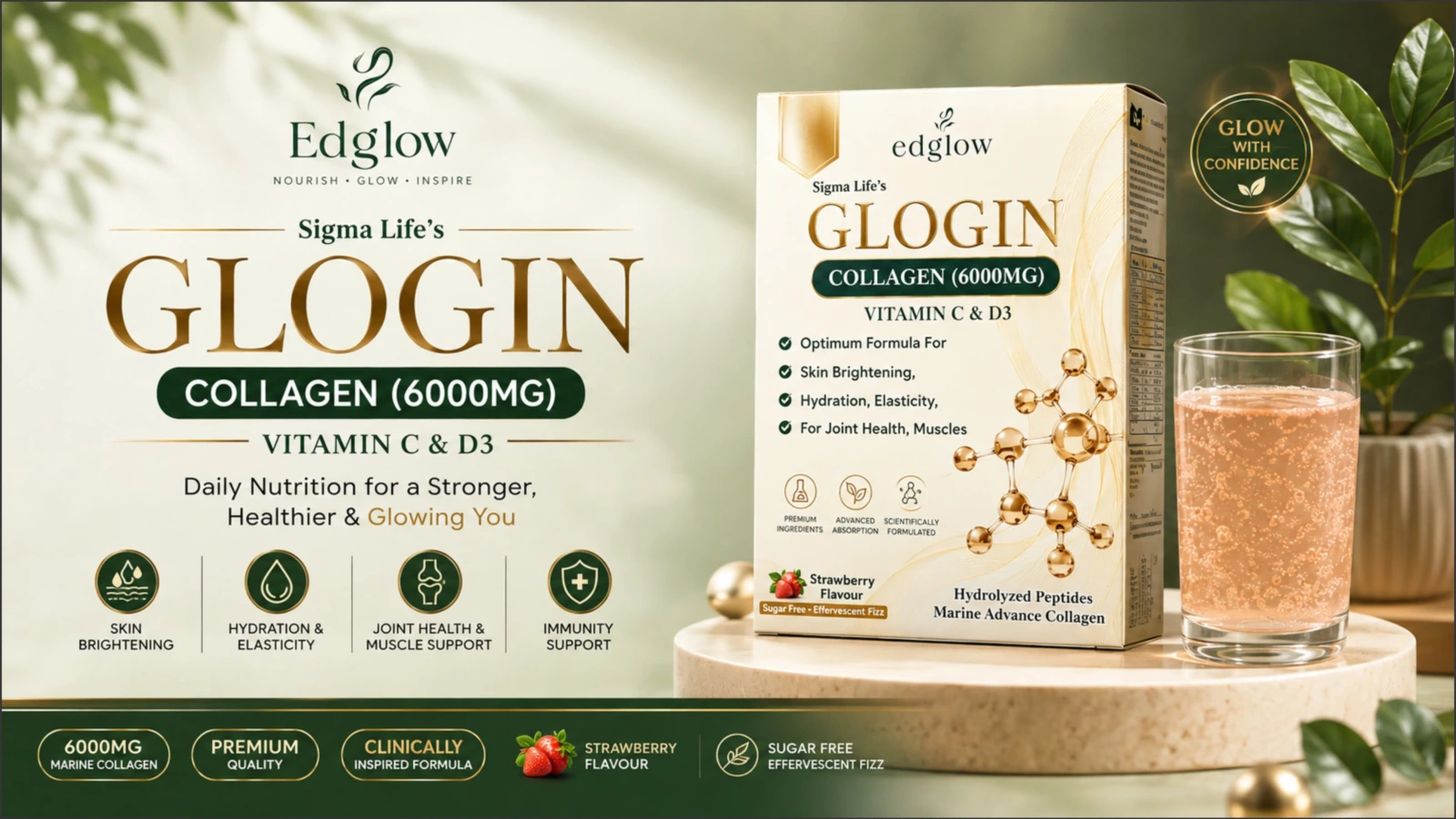
For readers who prefer a single-serving sachet, GLOGIN by Edglow is one option — 6000mg of marine collagen with vitamin C and vitamin D3, in a strawberry-flavoured sachet you mix with water. It is mentioned here as an example of the format, not as a substitute for the checklist above. The best collagen product is not the one making the loudest claims; it is the one with a clear formula and a serving you will keep taking.
Habits That Matter More Than Any Supplement
No collagen routine replaces a healthy lifestyle, and it is worth being blunt about that.
Sun protection does more for collagen in your skin than any supplement on the market. Ultraviolet exposure is the largest external cause of collagen breakdown, and in Pakistan that exposure is year-round. Daily sunscreen, a cap, and shade between eleven and three will outperform anything you drink.
Beyond that: eat enough protein, drink enough water, sleep properly, move your body, and cut back on smoking and heavy sugar. None of this is exciting, and all of it works.
Who Should Be Careful
Collagen peptides are generally well tolerated, but a few sensible precautions apply. Marine collagen is derived from fish and should be avoided by anyone with a fish or shellfish allergy. If you are pregnant, nursing, managing a health condition or taking regular medication, speak to your doctor before adding any supplement to your routine. And if you notice persistent digestive discomfort after starting something new, stop and reassess.
A supplement is meant to support a routine, not carry it.
The Bottom Line
Collagen is not another beauty buzzword. It is the structural protein your skin, joints and connective tissue are built from, and it genuinely does change as you get older.
What it is not is a shortcut. Collagen supports skin that is already being looked after — protected from the sun, fed properly, rested and hydrated. Taken consistently alongside those habits, it is a reasonable addition. Taken instead of them, it will disappoint you.
Understand your body. Nourish it well. Protect your skin. Stay consistent, and choose products that tell you exactly what is inside them.
Not sure where to start? Our skin quiz takes a couple of minutes and points you towards a routine that fits your skin rather than someone else’s.